
Andy Warhol American, 1928-1987
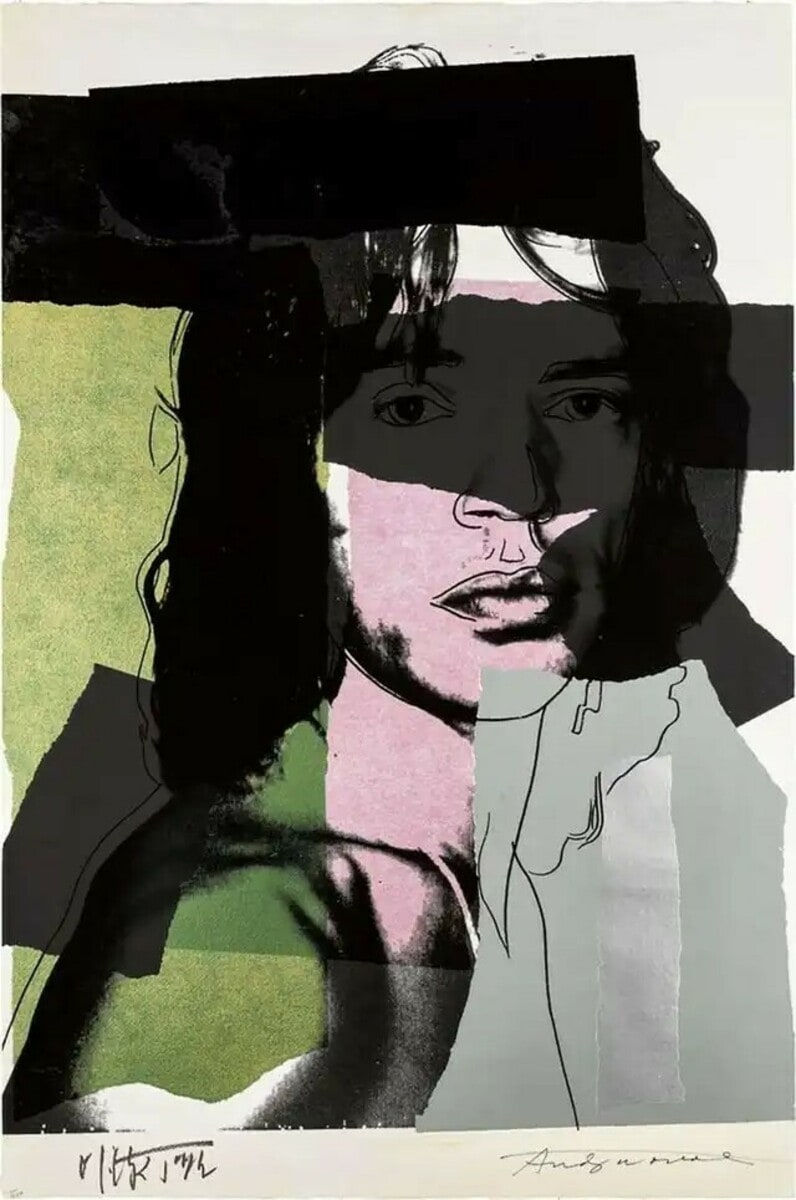
Mick Jagger (FS II.145), 1975
Screenprint on Arches Aquarelle (Rough) paper
110.5 x 73.7 cm
43 1/2 x 29 1/50 in.
43 1/2 x 29 1/50 in.
Mick Jagger (FS II.145) is one of the most striking prints from Andy Warhol’s 1975 “Mick Jagger” portfolio, a groundbreaking collaboration between the Pop Art pioneer and the Rolling Stones’...
Mick Jagger (FS II.145) is one of the most striking prints from Andy Warhol’s 1975 “Mick Jagger” portfolio, a groundbreaking collaboration between the Pop Art pioneer and the Rolling Stones’ legendary frontman. In this ten-part series, Warhol transforms Jagger’s magnetic persona into a vibrant study of fame, identity, and performance, fusing the raw energy of rock music with the stylized detachment of Pop Art.
In FS II.145, Jagger’s head and shoulders dominate the composition. His pose is relaxed yet commanding, his expression intense and self-assured. Warhol uses a photographic silkscreen base overlaid with bold, gestural line drawings and planes of vivid color—often reds, blues, yellows, and blacks—that break the image into dynamic, layered forms. The combination of flat color and expressive hand-drawn marks gives the portrait a sense of movement, as if Jagger’s energy can’t be contained by the frame.
The Mick Jagger portfolio was unique in that each print was hand-signed by both Warhol and Jagger, reinforcing the synergy between artist and subject. Both men were icons of their time—masters of self-presentation who blurred the boundaries between art, celebrity, and commerce. In FS II.145, Warhol captures not only Jagger’s physical presence but also the mythology surrounding him: the seductive confidence, rebellious glamour, and performative power that defined 1970s rock culture.
Mick Jagger (FS II.145) stands as a bold testament to Warhol’s fascination with fame and the cult of personality. Through the layering of color, line, and celebrity, the work becomes both portrait and symbol—an emblem of the era when art and pop music collided to redefine modern culture.
In FS II.145, Jagger’s head and shoulders dominate the composition. His pose is relaxed yet commanding, his expression intense and self-assured. Warhol uses a photographic silkscreen base overlaid with bold, gestural line drawings and planes of vivid color—often reds, blues, yellows, and blacks—that break the image into dynamic, layered forms. The combination of flat color and expressive hand-drawn marks gives the portrait a sense of movement, as if Jagger’s energy can’t be contained by the frame.
The Mick Jagger portfolio was unique in that each print was hand-signed by both Warhol and Jagger, reinforcing the synergy between artist and subject. Both men were icons of their time—masters of self-presentation who blurred the boundaries between art, celebrity, and commerce. In FS II.145, Warhol captures not only Jagger’s physical presence but also the mythology surrounding him: the seductive confidence, rebellious glamour, and performative power that defined 1970s rock culture.
Mick Jagger (FS II.145) stands as a bold testament to Warhol’s fascination with fame and the cult of personality. Through the layering of color, line, and celebrity, the work becomes both portrait and symbol—an emblem of the era when art and pop music collided to redefine modern culture.