
Andy Warhol American, 1928-1987
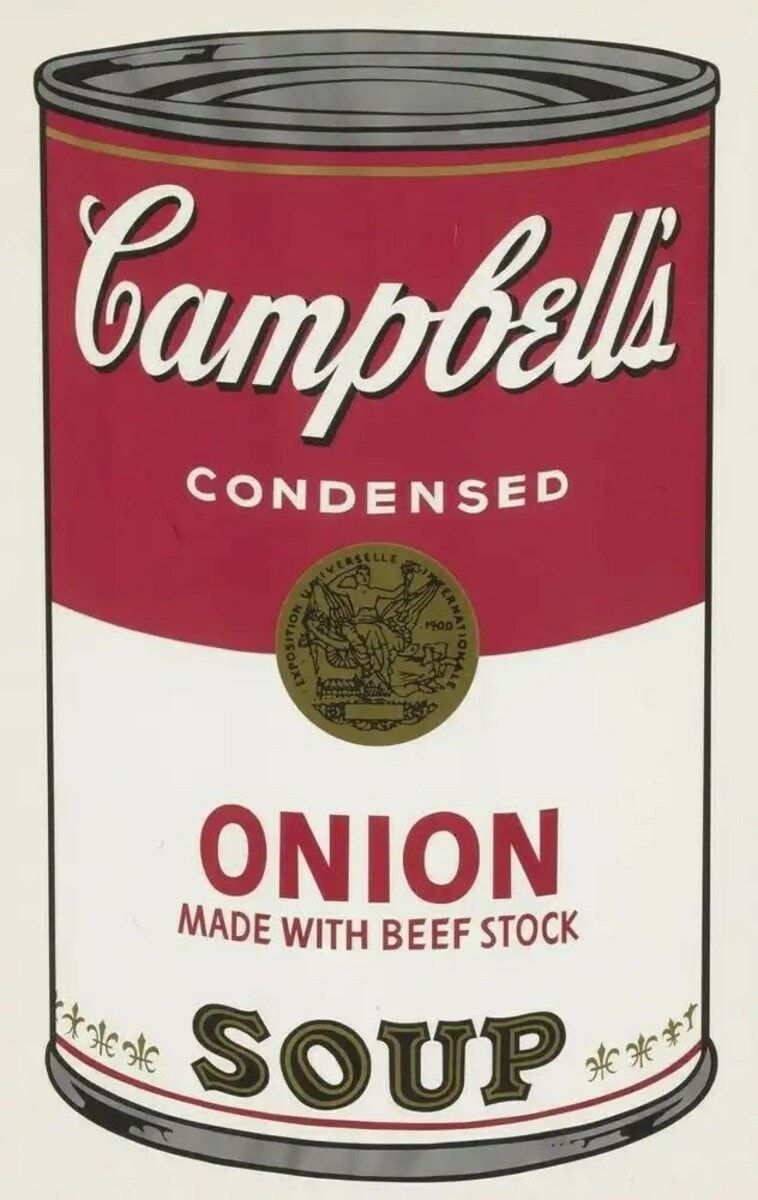
Campbell's Soup I, Onion (F. & S. II.47), 1968
Screenprint on paper
89 x 58 cm
35 1/25 x 22 83/100 in.
35 1/25 x 22 83/100 in.
Andy Warhol’s Onion (F. & S. II.47) is one of ten prints from the 1968 Campbell’s Soup I portfolio, marking a pivotal moment in Pop Art history. Building on his...
Andy Warhol’s Onion (F. & S. II.47) is one of ten prints from the 1968 Campbell’s Soup I portfolio, marking a pivotal moment in Pop Art history. Building on his breakthrough 1962 paintings of soup cans, Warhol continued to explore the intersection of consumer culture and fine art by screenprinting images of real-life grocery products with exacting detail.
In this print, Warhol presents a Campbell’s “Onion” soup can, rendered in flat, crisp red and white tones with the iconic gold seal and decorative script. Using silkscreen printing—a method rooted in commercial production—Warhol removes any trace of the artist’s hand, highlighting the mechanical nature of both the product and the image.
By isolating the can against a blank background, Warhol gives this everyday object a monumental quality. The subject, while mundane, becomes a symbol of American mass production, branding, and postwar domestic life.
Onion reflects Warhol’s ongoing fascination with repetition, uniformity, and the ways in which marketing shapes cultural identity. With this work, he transforms a simple label into a timeless icon of both Pop Art and consumer society.
In this print, Warhol presents a Campbell’s “Onion” soup can, rendered in flat, crisp red and white tones with the iconic gold seal and decorative script. Using silkscreen printing—a method rooted in commercial production—Warhol removes any trace of the artist’s hand, highlighting the mechanical nature of both the product and the image.
By isolating the can against a blank background, Warhol gives this everyday object a monumental quality. The subject, while mundane, becomes a symbol of American mass production, branding, and postwar domestic life.
Onion reflects Warhol’s ongoing fascination with repetition, uniformity, and the ways in which marketing shapes cultural identity. With this work, he transforms a simple label into a timeless icon of both Pop Art and consumer society.
Subscribe to our mailing list
Subscribe for discreet access to new works, private sales opportunities, and informed commentary on the contemporary art market.