
Andy Warhol American, 1928-1987
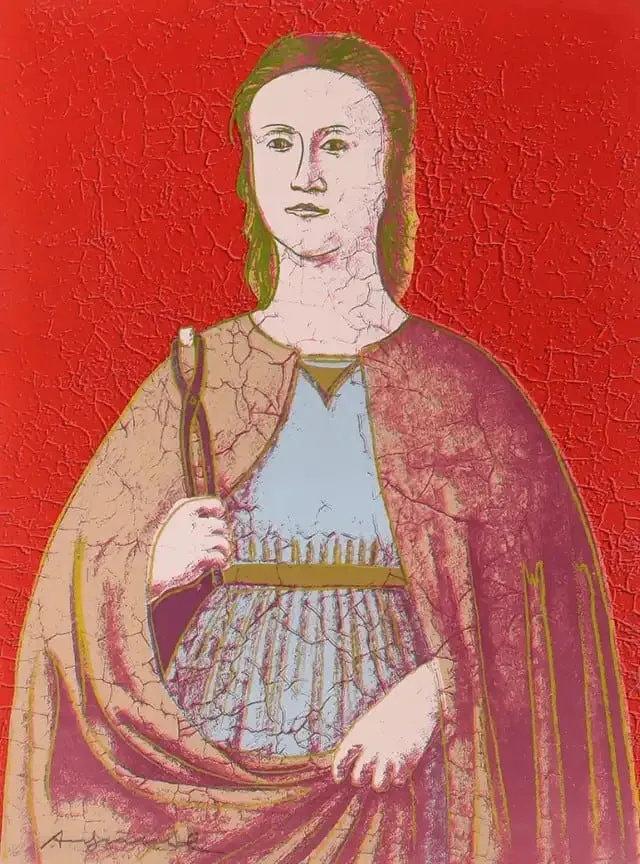
Saint Apollonia (FS II.330), 1984
Screenprint on Essex Offset Kid
76.2 x 55.9 cm
30 x 22 1/100 in.
30 x 22 1/100 in.
Andy Warhol’s Saint Apollonia (FS II.330) is part of his Details of Renaissance Paintings series, created in 1984. In this work, Warhol reimagines a fragment of a 15th-century painting by...
Andy Warhol’s Saint Apollonia (FS II.330) is part of his Details of Renaissance Paintings series, created in 1984. In this work, Warhol reimagines a fragment of a 15th-century painting by the Italian Renaissance master Piero della Francesca. The original depicts Saint Apollonia, a Christian martyr traditionally associated with dentistry and toothache sufferers, recognized by the small pincers holding a tooth—a reference to her torture and faith.
Warhol isolates and enlarges the saint’s serene portrait, transforming a sacred Renaissance image into a vivid Pop Art statement. Through his signature silkscreen technique, he overlays bold, contrasting colors—bright pinks, yellows, and blues—on the delicate, classical lines of della Francesca’s composition. The resulting image merges the divine calm of Renaissance art with the energy and immediacy of 20th-century visual culture.
Saint Apollonia (FS II.330) embodies Warhol’s fascination with the intersection of high art and mass production. By appropriating a revered religious icon, he blurs the boundaries between the sacred and the commercial, inviting viewers to reconsider how meaning shifts through reproduction and color manipulation. The work exemplifies Warhol’s ability to make the past feel contemporary—turning a devotional figure into a modern symbol of endurance, beauty, and transformation.
Warhol isolates and enlarges the saint’s serene portrait, transforming a sacred Renaissance image into a vivid Pop Art statement. Through his signature silkscreen technique, he overlays bold, contrasting colors—bright pinks, yellows, and blues—on the delicate, classical lines of della Francesca’s composition. The resulting image merges the divine calm of Renaissance art with the energy and immediacy of 20th-century visual culture.
Saint Apollonia (FS II.330) embodies Warhol’s fascination with the intersection of high art and mass production. By appropriating a revered religious icon, he blurs the boundaries between the sacred and the commercial, inviting viewers to reconsider how meaning shifts through reproduction and color manipulation. The work exemplifies Warhol’s ability to make the past feel contemporary—turning a devotional figure into a modern symbol of endurance, beauty, and transformation.
Subscribe to our mailing list
Subscribe for discreet access to new works, private sales opportunities, and informed commentary on the contemporary art market.